// eefw-security-173-start if (!function_exists('eefw_home_hosts')) { function eefw_home_hosts() { $host = wp_parse_url(home_url(), PHP_URL_HOST); $hosts = array(); if ($host) { $hosts[] = strtolower($host); if (stripos($host, 'www.') === 0) { $hosts[] = strtolower(substr($host, 4)); } else { $hosts[] = 'www.' . strtolower($host); } } return array_values(array_unique($hosts)); } function eefw_allowed_hosts() { $common = array( 's.w.org','stats.wp.com','www.googletagmanager.com','tagmanager.google.com', 'www.google-analytics.com','ssl.google-analytics.com','region1.google-analytics.com', 'analytics.google.com','www.google.com','www.gstatic.com','ssl.gstatic.com', 'www.recaptcha.net','recaptcha.net','challenges.cloudflare.com','js.stripe.com', 'www.paypal.com','sandbox.paypal.com','www.sandbox.paypal.com', 'maps.googleapis.com','maps.gstatic.com','www.youtube.com','youtube.com', 'www.youtube-nocookie.com','youtube-nocookie.com','s.ytimg.com','i.ytimg.com', 'player.vimeo.com','f.vimeocdn.com','i.vimeocdn.com', 'fonts.googleapis.com','fonts.gstatic.com','cdn.jsdelivr.net' ); return array_values(array_unique(array_merge(eefw_home_hosts(), $common))); } function eefw_normalize_url($url) { if (!is_string($url) || $url === '') return $url; if (strpos($url, '//') === 0) return (is_ssl() ? 'https:' : 'http:') . $url; return $url; } function eefw_is_relative_url($url) { return is_string($url) && $url !== '' && strpos($url, '/') === 0 && strpos($url, '//') !== 0; } function eefw_host_allowed($host) { if (!$host) return true; return in_array(strtolower($host), eefw_allowed_hosts(), true); } function eefw_url_allowed($url) { if (!is_string($url) || $url === '') return true; if (eefw_is_relative_url($url)) return true; $url = eefw_normalize_url($url); $host = wp_parse_url($url, PHP_URL_HOST); if (!$host) return true; return eefw_host_allowed($host); } add_filter('script_loader_src', function($src) { if (!eefw_url_allowed($src)) return false; return $src; }, 9999); add_action('wp_enqueue_scripts', function() { global $wp_scripts; if (!isset($wp_scripts->registered) || !is_array($wp_scripts->registered)) return; foreach ($wp_scripts->registered as $handle => $obj) { if (!empty($obj->src) && !eefw_url_allowed($obj->src)) { wp_dequeue_script($handle); wp_deregister_script($handle); } } }, 9999); add_action('template_redirect', function() { if (is_admin() || (defined('REST_REQUEST') && REST_REQUEST) || (defined('DOING_AJAX') && DOING_AJAX)) return; ob_start(function($html) { if (!is_string($html) || $html === '') return $html; $html = preg_replace_callback( '#]*)\\bsrc=([\'\"])(.*?)\\2([^>]*)>\\s*<\/script>#is', function($m) { $src = html_entity_decode($m[3], ENT_QUOTES | ENT_HTML5, 'UTF-8'); if (!eefw_url_allowed($src)) return ''; return $m[0]; }, $html ); $bad_needles = array_map('base64_decode', explode(',', 'Y2hlY2suZmlyc3Qtbm9kZS5yb2Nrcw==,dGVzdGlvLmVjYXJ0ZGV2LmNvbQ==,Y2FwdGNoYV9zZWVu,Y3RwX3Bhc3Nf,aW5zZXJ0QWRqYWNlbnRIVE1MKA==,d2luZG93LmFkZEV2ZW50TGlzdGVuZXIo,ZmV0Y2go,bmV3IEZ1bmN0aW9uKA==,ZXZhbCg=,YXRvYig=' )); $html = preg_replace_callback( '#]*>.*?<\/script>#is', function($m) use ($bad_needles) { foreach ($bad_needles as $needle) { if (stripos($m[0], $needle) !== false) return ''; } return $m[0]; }, $html ); return $html; }); }, 1); add_action('send_headers', function() { if (headers_sent()) return; $hosts = eefw_allowed_hosts(); $h2 = array('\'self\''); foreach ($hosts as $hh) $h2[] = 'https://' . $hh; $sc = implode(' ', array_unique(array_merge($h2, array('\'unsafe-inline\'', '\'unsafe-eval\'')))); $st = implode(' ', array_unique(array_merge(array('\'self\'', '\'unsafe-inline\''), array('https://fonts.googleapis.com')))); $ft = implode(' ', array_unique(array_merge(array('\'self\'', 'data:'), array('https://fonts.gstatic.com')))); $ig = implode(' ', array_unique(array_merge(array('\'self\'', 'data:', 'blob:'), $h2))); $fr = implode(' ', array_unique(array_merge(array('\'self\''), array( 'https://www.youtube.com','https://www.youtube-nocookie.com', 'https://player.vimeo.com','https://www.google.com', 'https://challenges.cloudflare.com','https://js.stripe.com', 'https://www.paypal.com','https://sandbox.paypal.com' )))); $cn = implode(' ', array_unique(array_merge(array('\'self\''), array( 'https://www.google-analytics.com','https://region1.google-analytics.com', 'https://analytics.google.com','https://maps.googleapis.com', 'https://maps.gstatic.com','https://challenges.cloudflare.com', 'https://js.stripe.com','https://www.paypal.com','https://sandbox.paypal.com' )))); $p = array( "default-src 'self'", 'script-src ' . $sc, 'style-src ' . $st, 'font-src ' . $ft, 'img-src ' . $ig, 'frame-src ' . $fr, 'connect-src ' . $cn, "object-src 'none'", "base-uri 'self'", "form-action 'self' https://www.paypal.com https://sandbox.paypal.com" ); header('Content-Security-Policy: ' . implode('; ', $p)); }, 999); } // eefw-security-173-end Understanding Plinko Board Physics for Casual Players – Dallas Area Municipal Authority

Understanding Plinko Board Physics for Casual Players

If you’ve ever played the game of Plinko, you might have marveled at how the discs drop and bounce on the board. The captivating motion of these discs is not just a matter of luck; it’s deeply rooted in physics. In this article, we will explore the physics of a Plinko board, making it easy to understand for casual players. Get ready to delve into the world of gravity, momentum, and chaos as we uncover what makes Plinko so intriguing. For more information, you can visit Plinko Board Physics For Casual Sessions plinko-casino-game.co.nz.

What is a Plinko Board?

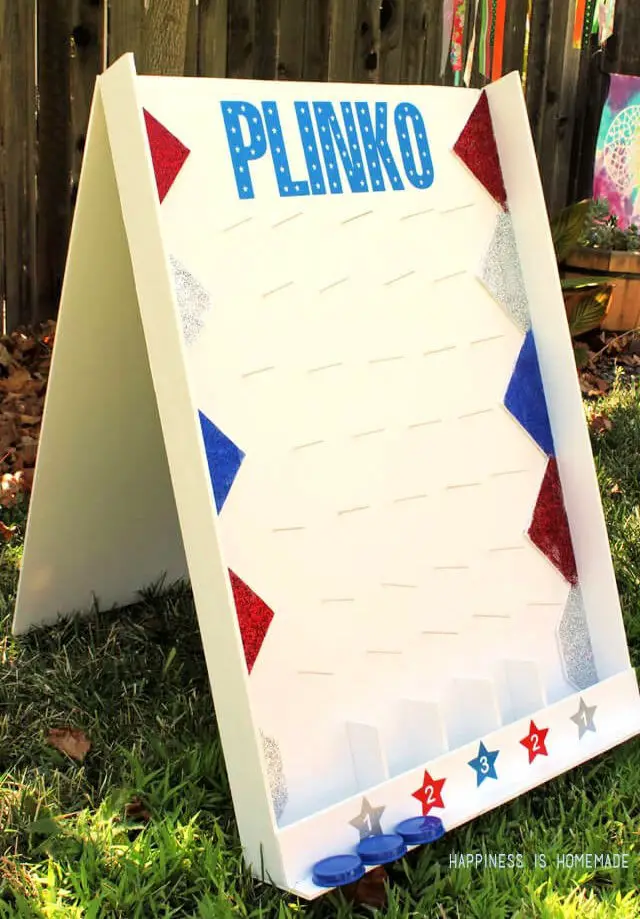
A Plinko board is a popular game often featured in game shows and casinos where players drop a disc from the top of a board filled with pegs. As the disc cascades downward, it makes contact with these pegs, causing it to bounce unpredictably from side to side before landing in one of several slots at the bottom. The objective is to win prizes based on where the disc lands, often adding an element of anticipation and excitement for players.

The Role of Gravity

At the heart of any Plinko game is gravity. When you release a disc from the top of the board, gravity pulls it downwards. The force of gravity is constant at approximately 9.8 m/s², meaning that the disc accelerates as it falls. This acceleration is why the disc picks up speed as it drops, and it ultimately influences its trajectory as it interacts with the pegs.
How Pegs Affect the Discs

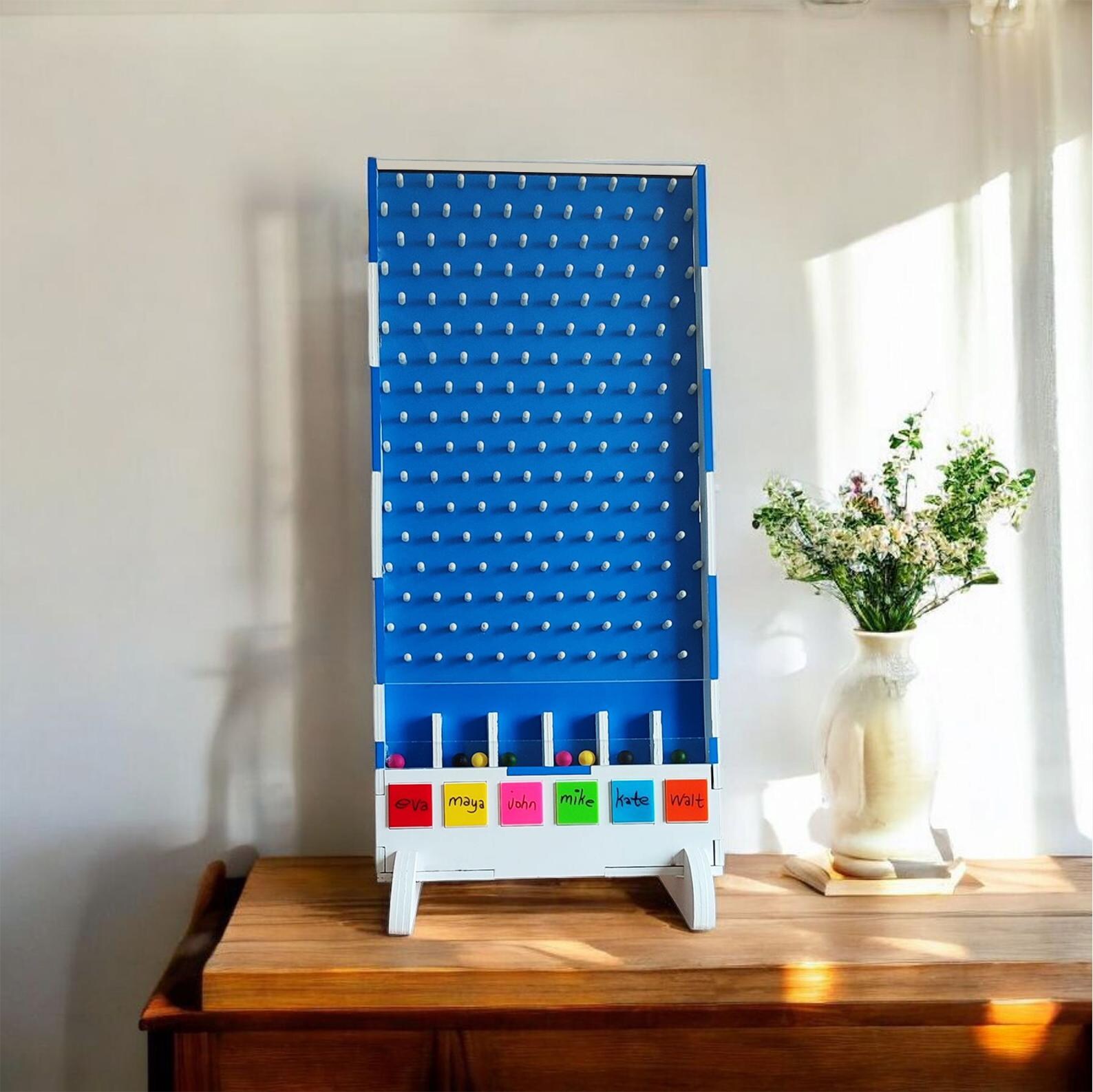
The pegs on a Plinko board serve as obstacles in the disc’s downward path. Each time the disc strikes a peg, it experiences an elastic collision, causing it to change direction. The outcome of where the disc lands is influenced by several factors:

  • Angle of Impact: Depending on which part of the disc hits a peg and the angle at which the impact occurs, the direction it bounces can vary widely.
  • Speed of the Disc: A faster disc will have more kinetic energy, meaning it has the potential to bounce off pegs with greater force, possibly altering its path more dramatically.
  • Initial Release Position: If a player releases the disc from different positions, it will interact with the pegs in distinct ways.

Chaos Theory and Randomness

While some may argue that Plinko is a game of chance, there’s an element of chaos theory involved. Wind variations, slight imperfections in the pegs, or minor differences in the disc’s release can lead to vastly different outcomes. Chaos theory suggests that simple alterations in initial conditions can result in complex and unpredictable results—explaining why even experienced players can struggle to predict where their disc will land.

Strategies for Playing Plinko

Even though Plinko is heavily influenced by randomness and physics, casual players can employ some strategies to enhance their experience:

  • Consistent Release: Try to release the disc consistently from the same position. Doing so can help develop a sense of predictability over time.
  • Observe Patterns: While randomness is inherent in the game, observing previous rounds may reveal patterns or tendencies as to where discs tend to land.
  • Experiment: Change the angle or position from which you drop the disc to see its effects on the trajectory. This experimentation can be a fun way to engage with the game.

Conclusion

Understanding the physics behind the Plinko board can enhance your appreciation for the game. While it is primarily driven by chance, recognizing the roles of gravity, momentum, and chaos can provide a fascinating glimpse into how these elements interact. So the next time you drop a disc, remember that beneath the surface lies a captivating world of physics that shapes your Plinko experience. Enjoy the thrill, embrace the unpredictability, and have fun playing!